

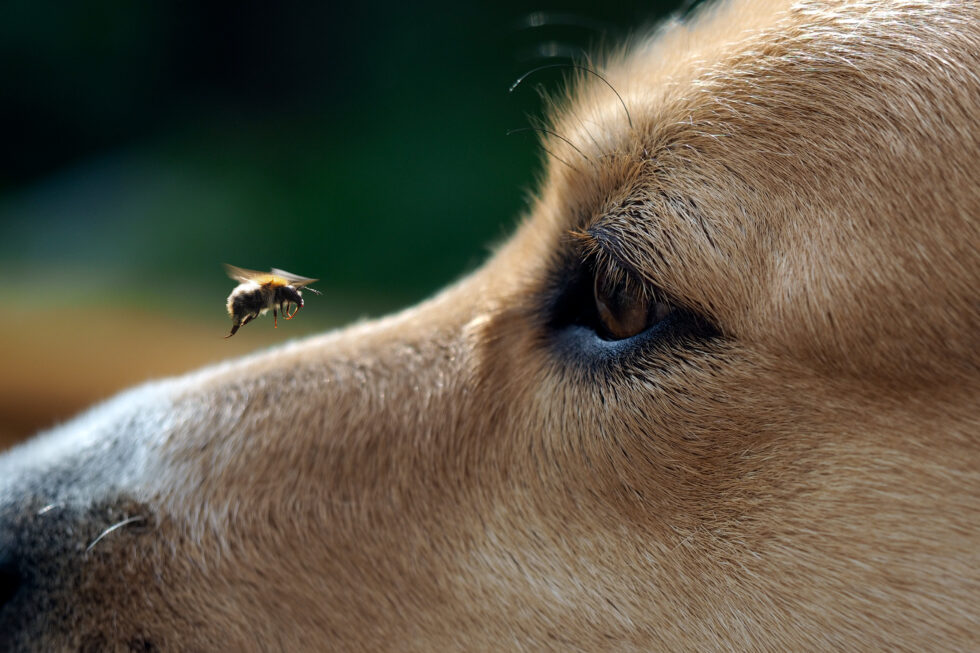
Spring is in full swing so the bees are busy doing their thing, but curious dogs don’t always keep their distance. That curiosity can lead to a painful sting, usually right on the nose or a paw. If your dog got stung by a bee, don’t panic. In most cases, it’s a minor issue that can be handled quickly and calmly at home.
Check for and Remove the Stinger
If a stinger is visible, removing it should be your first step. The key is to avoid squeezing it, which can release more venom. Instead, gently scrape it away using a fingernail or a flat object like a credit card. A light, careful touch makes all the difference.
Use a Cold Compress
Applying a cold compress can help reduce swelling and soothe discomfort. Wrap ice or a cold pack in a soft cloth before placing it on your dog’s skin—never apply ice directly. A few minutes at a time is usually enough to take the edge off. For most dogs, this is all that’s needed. You may notice mild swelling, sensitivity, or itching for a day or two, similar to how people react to stings.
Consider an Antihistamine (With Guidance)
An over-the-counter antihistamine like diphenhydramine can help manage mild allergic reactions…
However, proper dosing matters. Always call your veterinarian to confirm the correct amount for your dog before giving any over-the-counter medications, and avoid products that contain decongestants or xylitol, which can be harmful.
When to Be Concerned
While most bee stings are mild, some situations require more attention.
Watch for these signs of a severe reaction:
- Significant swelling, especially around the face or throat
- Difficulty breathing
- Vomiting or weakness
- Collapse or extreme lethargy
These symptoms require immediate veterinary attention.
Multiple Stings
Dogs that disturb a nest—especially ground nests like yellowjackets—can be stung multiple times. This is painful and can lead to more serious reactions. In these cases, prompt treatment by a veterinarian is important.
Stings in the Mouth
A bee sting inside the mouth can cause swelling that interferes with breathing. This situation should always be evaluated quickly—and calling your veterinarian right away.
Pet First Aid Care at Green Acres Pet Resort
Luckily, bee stings have been extremely rare at Green Acres Pet Resort—only one has been reported in the past several years. Still, our team is always prepared. For any minor first-aid need, our trained staff promptly assess the area, gently cleans the site, and monitors for signs of swelling or discomfort while keeping your dog calm and comfortable.
Pet parents are always contacted right away, so you’re fully informed about what happened and how your dog is doing. If there’s any indication that additional care is needed, we don’t hesitate to take the next step and coordinate with your veterinarian.
Dr. Laura Weis, veterinarian and co-owner of Green Acres Pet Resort emphasizes careful assessment is key—when there’s any question, involving your dog’s primary veterinarian ensures the safest, most appropriate care.
Creating a Pet First Aid Kit
Whether it’s in your wallet or on your smartphone, be sure to have this information readily available:
- Phone number of your veterinary practice
- Phone number of an emergency hospital/clinic
- ASPCA Animal Poison Control Center: 888-426-4435
- Online access, if available, to your veterinary practice with login to a pet portal for your pet’s health information
Fill a tote bag, plastic container or pet carrier with the following items—easily found at most grocery stores or pharmacies—for convenient transportation between home and car:
- Absorbent gauze pads, gauze roll and cotton balls
- Adhesive tape
- Antiseptic wipes or spray
- Small blanket, towel and/or pillowcase (to confine a cat for treatment)
- Instant cold packs
- Blunt-end scissors, tweezers and nail clipper
- Sterile saline solution
- OTC antibiotic ointment
- Splints or tongue depressors
- Expired/sample credit card (to scrape away insect stingers)
- Plastic eyedropper or syringe
You may also consider having a gallon of water, soft/inflatable e-collar, extra collar and leash, and Benadryl on hand.
The Bottom Line
Bee stings are a common part of outdoor adventures, especially in the warmer months. The good news is that most are mild and easily managed with simple at-home care. Quick action of removing the stinger and reducing swelling goes a long way in keeping your dog comfortable.
As dogs continue to explore, sniff, and investigate everything around them, the occasional sting is almost inevitable. Staying prepared—and having a pet first aid kit—helps ensure it’s nothing more than a brief bump in an otherwise happy, tail-wagging day.